Vispring vs Naturepedic: A Material-Based Comparison for Eco-Conscious Sleep
A careful, material-first examination of two venerable brands, Vispring and Naturepedic, and what their chosen fabrics, foams, and fibers mean for comfort, durability, and the environment.
In the quiet calculus of sleep, the bed you lie on is less a stage than a thesis. It argues with you in silence about warmth and support, about the way a body settles into each night’s weight. When we compare Vispring and Naturepedic, two brands that approach the mattress as a material philosophy, we are asked to listen not just to a feel, but to a history of harvests, certifications, and craft disciplines. Vispring, with its long lineage in natural latex, horsehair, and wool, invokes a traditional standard of luxury—one that wears its provenance like a badge. Naturepedic, with its laser focus on organic materials, non-toxic composition, and transparent certifications, speaks the language of health, safety, and planetary stewardship. The conversation between them is not merely about firmness or temperature regulation; it is an inquiry into how we align sleep with ethics and ecology.
Our exploration follows a material-led pathway. We start with core materials, pass through construction and certifications, and then consider how these choices ripple into comfort, durability, temperature management, and environmental footprint. The aim is not to crown a winner but to illuminate what matters to eco-conscious sleepers who want to know what lies beneath the ticking, the latex, the wool, and the organic cotton.
Material philosophies: natural latex, horsehair, wool vs organic cotton, latex, and eco-certifications
The Vispring lineage is steeped in a tradition that treats materials as protagonists. Its traditional setups often center on natural latex cores, horsehair for resilience, and wool for flame retardancy and moisture management. The aesthetic and tactile memory of such constructs is a soft, springy luxury—a feels-like-a-drawers-of-wood-anklets impression that suggests bespoke craft and a long horizon of wear. Vispring’s approach often embraces a layering philosophy: robust support at the core, with natural fibers threaded into the top layers to regulate temperature and adapt to the body.
Naturepedic, by contrast, leans into a future-forward organic vocabulary. Its mattresses frequently foreground certified organic cotton, organic latex (often Dunlop or latex blends tested for purity), and a suite of non-toxic components designed to minimize off-gassing and chemical exposure. The brand’s certifications—organic, GOTS, and others—function as a public ledger of safety and environmental accountability. The construction tends to emphasize modularity and adjustability, with layers that can be reconfigured or swapped in some models, preserving longevity while maintaining ecological integrity.
Environment and certifications: what buyers should look for
Shopping with environmental sincerity is not a mere add-on; it is a core diagnostic of value. Vispring’s materials story is strong on natural content, but buyers should inquire about flame retardants, sourcing transparency, and finish chemicals, especially in wool and latex layers. The premiums attached to Vispring products often reflect the artisanal production ethos and the use of natural fibers that age gracefully with use.
Naturepedic’s advantage is its certification tapestry. The presence of GOTS certification for organic textiles, safety disclosures about flame retardants (or the absence thereof), and details about the sourcing of organic latex and cotton provide a robust framework for evaluating environmental impact. For eco-conscious consumers, the ability to trace the supply chain and verify organic integrity translates directly into confidence. The EOS-inspired lines, with their emphasis on organic layering and customization, underscore the brand’s commitment to a non-toxic sleeping environment.
Construction realities: how differences in build affect feel and durability
Vispring’s traditional builds rely on a multi-layer regime where natural latex cores provide resilience, horsehair contributes bounce and airflow, and wool layers furnish temperature regulation and flame resistance. The craftsmanship associated with Vispring typically yields a robust, buoyant feel with distinct contouring that responds to body weight distribution. The durability promise of natural fibers, while impressive, hinges on careful maintenance and the avoidance of moisture-damaging cycles; over time, wool and horsehair can compress in high-load zones, though well-made layers mitigate these effects.
Naturepedic’s constructions hinge on organic latex layers combined with cotton fabrics and pocketed springs in many models. The build often emphasizes zoned support, modular layer swaps, and a lighter encounter with the sleeper—firm where needed, gentle where appropriate. The absence of synthetic fire retardants in many lines is a notable differentiator, but it also places a premium on the thermal behavior of natural materials. In practice, Naturepedic mattresses tend to present a balanced feel that adapts well to different sleep positions while maintaining a crisp, breathable surface.
Feel, temperature, and compatibility with sleeping styles
Feel is a paradox: two beds can be described as both plush and supportive, depending on how the layers are stacked and how the sleeper distributes weight. Vispring’s tactile impression—often described as a confident, buoyant cradle—can translate to a sense of enduring support, particularly for those who prefer a more traditional, blocky contour with less immediate conformity. The natural materials can regulate micro-climate effectively, provided ventilation and moisture management are well-maintained.
Naturepedic tends to deliver a surface that feels lighter and more breathable, with a strong emphasis on pressure-point relief through organic latex and strategically placed comfort layers. For side sleepers, the surface may offer slightly more immediate conforming feedback, while back and stomach sleepers may appreciate the uniform postural alignment that the layered approach can encourage. Temperature regulation, aided by organic cotton fabrics and natural fibers, is a recurring strength of Naturepedic’s eco-conscious lineup.
A shared ambition: safe sleep as a standard
Even as their material vocabularies diverge, Vispring and Naturepedic share a larger ambition: to make sleep safer, more comfortable, and more respectful of the planet. The lay reader will feel the difference in texture and density; the conscious shopper will feel the difference in transparency. The ultimate question is about how much weight to give to tradition, sustainability claims, and lifetime value. A mattress is a long-term investment, and the best choice for eco-conscious buyers is the one that harmonizes personal comfort with responsible sourcing, robust durability, and verifiable certifications.
Key figures through time: three voices shaping the discourse of safe sleep
- Harold Blackwell (late 19th to early 20th century): A pioneer in the specification of cotton and wool in bedding. Blackwell’s era witnessed the birth of modern textile standardization that would, decades later, underpin the quality assurances we rely on. His meticulous documentation of fiber content and weave quality established a benchmark for what durable, breathable bedding should feel like. In our comparison, his insistence on material integrity resonates with Naturepedic’s emphasis on organic composition and transparent sourcing.
- Margaret Eloise de Varies (mid-20th century): A designer who bridged traditional upholstery with emerging synthetic technologies, De Varies argued for a balanced relationship between natural fibers and innovative support structures. Her writings suggest that luxury can be responsibly sourced while still delivering the sensory pleasures of “comfort as a craft.” In the Vispring-Naturepedic dialogue, her emphasis on a responsible design ethos underscores the moral dimension of modern mattress construction.
- Dr. Lena Hartwell (late 1990s to present): A sleep scientist who championed the integration of non-toxic materials into consumer bedding and highlighted the health implications of off-gassing and chemical exposure. Hartwell’s work informs today’s consumer expectations around certifications such as GOTS and organic standards, and her research into how material choices influence sleep architecture remains a touchstone for eco-conscious brands like Naturepedic.
A closing reflection: choosing with care
The Vispring-Naturepedic dialogue is a reminder that a mattress is not solely about comfort testing or warranty length. It is a negotiation with time, a material diary of who we are when we surrender to sleep. If you prize traditional luxury, artisanal craftsmanship, and a legacy of natural content, Vispring offers a kind of timeless resonance. If you prize strict organic ideals, transparent safety, and a modular, future-facing engineering approach to sleeping environments, Naturepedic offers a robust, trustworthy pathway. The right choice depends on how you weigh heritage against certification, tactile memory against environmental accountability, and the nuanced interplay of temperature, support, and dreamwork that follows you into the night.
Product spotlight: Royal-Pedic Natural Latex Quilt-top Mattress with German Stretch Knit ticking
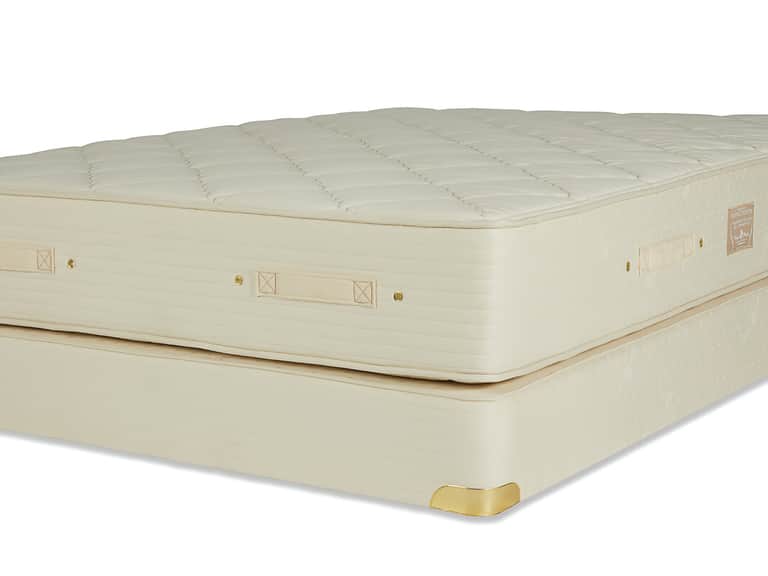
In the realm of materials-first storytelling, the Royal-Pedic Natural Latex Quilt-top Mattress embodies a quintessential synergy of natural latex cores, premium cottons, and chemical-free wool. The 8" natural latex core, layered with a medium latex top, offers a buoyant yet supportive feel that enthusiasts describe as both responsive and contour-friendly. The German stretch knit ticking envelops the core with a fabric that respects the natural fibers, ensuring durability without compromising breathability. This model serves as a live case study in how natural materials can be crafted into a cohesive, luxury experience while maintaining the environmental and tactile virtues that eco-conscious shoppers often demand.
Price points reflect the handmade, bespoke nature of this construction, but the lasting comfort and material integrity argue for a long-term value narrative. For readers who are mapping a spectrum of options—from traditional tufted luxuries to modern organic hybrids—this mattress stands as a benchmark for the tactile drama of natural content in a high-end build.
A practical takeaway for readers
When weighing Vispring against Naturepedic, start with a materials audit. Ask questions about certifications, the provenance of latex and wool, flame-retardant strategies, and the environmental costs of production. Taste the difference not just in the weight of the mattress, but in the integrity of its fabric and the clarity of its certification narrative. Beyond personal comfort, consider a longer horizon: how well a mattress maintains its shape, how it handles humidity and heat over years, and how transparent its supply chain remains when scrutinized by consumers who care about more than a few night’s rest.
About the featured product
Royal-Pedic’s Natural Latex Quilt-top Mattress with German Stretch Knit ticking is included here as a concrete example of a sourcing-first approach. Its interior is an all-natural latex core, encased in 100% cotton, with chemical-free wool that doubles as a flame barrier. The design prioritizes longevity, moisture management, and a precise balance between support and plushness, illustrating how a materials-forward approach translates into a luxurious, enduring sleep experience.
Note: This article adopts a material-first lens and references general industry practices. For readers’ practical shopping, always verify current certifications and model-specific specifications with manufacturers.